⮜ Back to Blog
22nd July 253 min read
Comparison of Bonding: Epoxy-Coated vs Uncoated TMT Bars
A technical comparison between epoxy-coated and uncoated TMT bars based on bond strength, durability, and practical use cases.
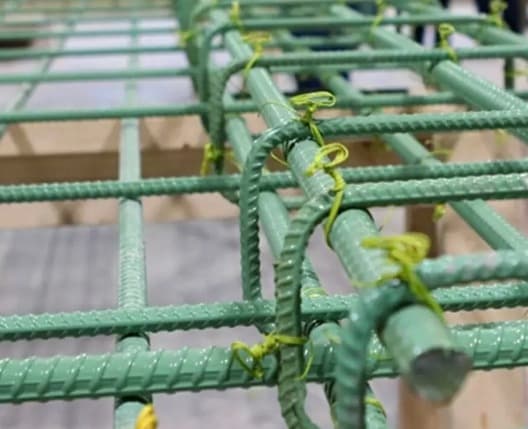
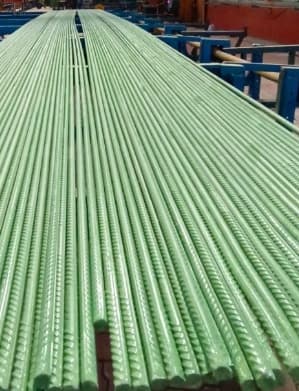
This document provides a technical comparison between epoxy-coated and uncoated TMT bars based on bond strength, durability, and practical considerations in reinforced concrete structures.
Comparison of Bonding: Epoxy-Coated vs Uncoated TMT Bars
| Parameter | Uncoated TMT Bar | Epoxy-Coated TMT Bar |
|---|---|---|
| Surface Texture | Ribbed steel with direct concrete contact | Ribbed steel with smooth epoxy layer |
| Chemical Adhesion | Strong bond due to direct steel-cement contact | Reduced due to epoxy acting as a barrier |
| Mechanical Interlock | Excellent due to clear ribs | Slightly reduced due to filled ribs (coating thickness ~150-300 um) |
| Average Bond Stress (M20-M30) | 1.6 - 2.2 MPa | 1.35 - 2.0 MPa (5%-15% lower) |
| Pull-Out Strength (Laboratory) | 100% baseline | 85% - 95% of uncoated bar |
| Development Length Required | As per IS 456 | 5%-15% longer than uncoated bars |
| Durability in Chloride Exposure | Poor - prone to corrosion | Excellent - highly corrosion resistant |
| Suitability in Marine/Coastal Areas | Not recommended | Highly recommended |
| Cost | Normal | 15%-30% higher |
| Damage Sensitivity | No coating, no damage risk | Requires care during handling to avoid coating damage |
| Long-Term Performance in Harsh Conditions | May fail due to rust expansion | Better resistance and longer life |
Example Test Data (from Pull-Out Test Research)
| Bar Type | Concrete Grade | Bar Dia (mm) | Avg. Pull-Out Load (kN) | Bond Stress (MPa) |
|---|---|---|---|---|
| Uncoated TMT Bar | M25 | 16 | 78.0 | 2.05 |
| Epoxy-Coated TMT Bar | M25 | 16 | 68.2 | 1.79 |
Source: Based on average values from research papers (e.g., FHWA, ACI 408, IIT reports)
Which is Better?
For Bond Strength Alone:
Uncoated TMT bars perform better in bonding with concrete due to direct contact and sharper ribs.
For Long-Term Durability in Aggressive Environments:
Epoxy-coated TMT bars are better for durability, especially where corrosion is a concern (coastal zones, basements, water tanks, bridges, industrial plants).
Engineering Recommendation
| Condition | Recommended TMT Type |
|---|---|
| Dry areas with low corrosion risk | Uncoated TMT bars (Fe500/Fe550D) |
| Normal RCC residential/commercial work | Uncoated TMT with proper cover |
| Marine, coastal, humid zones | Epoxy-coated TMT bars |
| Structures in chemical/fertilizer plants | Epoxy-coated or CRS bars |
| Critical infrastructure (bridges, flyovers) | Epoxy-coated or stainless-clad bars |
Conclusion
- Uncoated TMT bars provide superior bond strength, which is critical for structural integrity in standard concrete design.
- Epoxy-coated TMT bars slightly reduce bond strength (5%-15%) but greatly enhance corrosion resistance, thus ensuring longer service life in harsh environments.
- Engineers must adjust development length and ensure coating quality when using epoxy-coated bars.
Verdict
- Use uncoated bars for general structures in normal environments.
- Use epoxy-coated bars where corrosion resistance and long-term durability outweigh a small reduction in bond strength.